To excel in sport, young athletes need more than just technical skills and physical fitness. They also need strong mental and social abilities to cope with the challenges that sport brings. The 5Cs framework provides a practical approach that coaches can use to help develop these essential psychological characteristics in young athletes.
What Are the 5Cs?
Different sports place unique mental and emotional demands on young athletes. The 5Cs represent five key psychological characteristics that help athletes develop the mental skills needed to thrive:
- Commitment: The strength of your motivation to improve, persevere, and learn new skills
- Communication: The social skills used when building relationships with teammates, coaches, and parents
- Concentration: The ability to focus on the right thing at the right time
- Control: Keeping calm, positive, and composed while also being alert and ready
- Confidence: Belief in your abilities, often emerging when the other four Cs are strong
These characteristics work together to help athletes develop resilience, maintain positive relationships, and perform at their best when it matters most.
 Figure 1: The 5Cs framework showing the five psychological characteristics that help athletes succeed in sport.
The First C: Commitment
Commitment reflects the strength of your motivation to improve, persevere, and learn new skills. It's about more than just showing up—it's about the quality of effort you bring to every training session and competition.
What Does Commitment Look Like?
Athletes with strong commitment demonstrate specific behaviors:
- Consistent effort from start to finish: Giving your best throughout entire training sessions and matches, not just at the beginning
- High-quality preparation: Arriving ready to train, with the right equipment and mindset
- Desire to take on new challenges: Embracing opportunities to learn and develop new skills
- Learning from mistakes: Viewing errors as opportunities for improvement rather than failures
- Taking pride in progress: Recognizing and celebrating your own development and improvement
Committed athletes don't give up easily when things get tough. They understand that improvement takes time and effort, and they're willing to put in the work consistently.
The Second C: Communication
Communication involves the social skills shown when building relationships with teammates, coaches, and parents. It's like the superglue that holds teams together and helps everyone work toward common goals.
The Building Blocks of Communication
Good communication in sport includes:
- Asking questions: Seeking to understand instructions, tactics, or how you can improve
- Sharing thoughts and ideas: Contributing to team discussions and problem-solving
- Giving encouragement: Supporting teammates with positive words and actions
- Listening respectfully: Paying attention when coaches give instructions or teammates share ideas
- Accepting feedback: Being open to constructive criticism and using it to improve
Athletes with strong communication skills understand that sport is a social activity. They know how to express themselves clearly and also know when to listen. These skills help build trust, strengthen relationships, and create positive team environments where everyone can thrive.
The Third C: Concentration
Concentration is an athlete's ability to focus on the right thing at the right time. In the heat of competition, there are countless things that can pull your attention away from what really matters for your performance.
Staying Focused Under Pressure
Athletes with good concentration skills can:
- Stay focused during distractions: Keep attention on the task even when there's noise, movement, or other interference around them
- Quickly recognize when they lose focus: Notice when their mind has wandered to something unhelpful
- Refocus effectively: Use strategies like positive self-talk to bring their attention back to what's important
- Maintain present-moment awareness: Stay in the "here and now" rather than dwelling on past mistakes or worrying about future outcomes
Think of concentration as a spotlight that you control. Good athletes can point that spotlight exactly where it needs to be, even when there are many competing demands for their attention. When the spotlight drifts away, they can quickly redirect it back to what matters most.
The Fourth C: Control
Control means keeping calm, positive, and composed while also being alert and ready. Sport can activate a wide range of emotions—excitement, nervousness, frustration, disappointment—and learning to manage these feelings is crucial for consistent performance.
Managing Your Emotions
Athletes develop control through practical strategies:
- Slow, steady breathing: Using controlled breathing techniques to stay calm when feeling nervous or tense
- Listening to music: Using pre-performance routines that include music to get into the right mental state
- Showing positive reactions after mistakes: Responding constructively to errors rather than getting frustrated or angry
- Maintaining composed body language: Projecting confidence and calmness through posture and facial expressions
- Accepting that emotions are normal: Understanding that feeling nervous or excited is part of sport
Control isn't about eliminating emotions or becoming a robot. It's about recognizing what you're feeling and having practical tools to manage those emotions so they help rather than hinder your performance. Athletes with good control can perform consistently even when facing pressure or setbacks.
The Fifth C: Confidence
Confidence often emerges when the other four Cs are strong. It represents an athlete's belief in their abilities and their willingness to test themselves in challenging situations.
What Confidence Looks Like
Athletes with strong confidence demonstrate:
- Testing new skills: Being willing to try new techniques or tactics in training and competition
- Taking calculated risks: Making bold decisions and plays when opportunities arise
- Strong body language: Projecting self-assurance through posture, eye contact, and movement
- Supporting teammates: Actively encouraging others and showing leadership
- Fighting consistently: Maintaining effort and intensity throughout competitions, especially when facing adversity
Confidence isn't just a feeling—it's something you show through your actions and behaviors. The good news is that confidence grows naturally as you develop commitment, communication, concentration, and control. Each small success in these areas builds your belief in yourself and strengthens your confidence foundation.
How Do We Know the 5Cs Work?
Researchers wanted to understand whether coaches could actually help young athletes develop these five characteristics. They conducted studies with youth football teams to find out.
What the Research Showed
In these studies, coaches worked with their players to develop the 5Cs over a 15-week period. The coaches used specific strategies:
- Discussing the 5Cs behaviors: Explaining what commitment, communication, concentration, control, and confidence look like in practice
- Praising positive demonstrations: Recognizing and celebrating when players showed any of the 5Cs
- Encouraging peer support: Creating opportunities for players to support each other in developing these skills
The results were encouraging. Players who received 5Cs coaching showed improvements in their mental and social skills compared to players who didn't receive this type of training. Even more interesting, parents reported that their children's improved skills transferred beyond the football pitch—they noticed better behaviors at school and in other areas of life.
These findings suggest that the 5Cs approach can help young athletes develop valuable skills that serve them well both in sport and in everyday life.
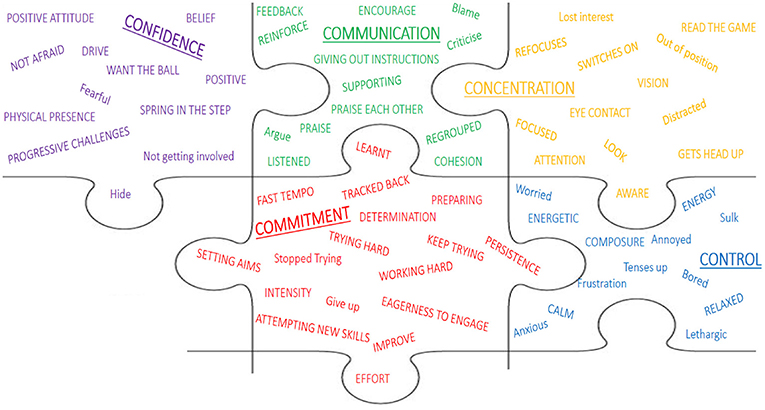 Figure 2: Study results demonstrating measurable improvements in athletes' psychological characteristics after 5Cs training.
Why the 5Cs Matter
The 5Cs provide a holistic framework for athlete development that goes beyond just physical training. When young athletes develop these five characteristics, they're building a foundation that helps them:
- Handle pressure and adversity: Stay composed when competitions get tough
- Work effectively with others: Build strong relationships with teammates and coaches
- Stay motivated: Maintain effort and enthusiasm even when progress is slow
- Perform consistently: Show their best abilities when it matters most
- Grow as people: Develop life skills that serve them beyond sport
What makes the 5Cs particularly valuable is that they're learnable. They're not personality traits you're born with—they're skills that can be practiced, developed, and strengthened over time with the right guidance and support.
Putting the 5Cs Into Practice
So how can you start developing the 5Cs in your sport?
For Athletes
- Notice which Cs are your strengths and which ones need more work
- Practice the specific behaviors associated with each C during training
- Ask your coach for feedback on how you're demonstrating the 5Cs
- Support your teammates in developing their own 5Cs
For Coaches
- Talk about the 5Cs regularly with your athletes so they understand what they mean
- Recognize and praise when you see athletes demonstrating any of the 5Cs
- Create training activities that specifically target different Cs
- Help athletes see how the 5Cs connect to their performance
For Parents
- Learn about the 5Cs so you can support your child's development
- Notice and acknowledge when your child shows the 5Cs, both in sport and at home
- Focus on effort and growth rather than just outcomes and results
- Work together with coaches to reinforce consistent messages
What's Next for the 5Cs?
While the research on the 5Cs is promising, scientists are still learning more about this approach. Future studies will help us understand:
- Whether the 5Cs work equally well across different sports
- What the best ways are to teach the 5Cs to athletes of different ages
- Whether 5Cs benefits continue as athletes get older
- How the approach might need to be adapted for different cultures and contexts
The 5Cs framework continues to evolve as researchers and practitioners learn more about how to help young athletes develop the mental and social skills they need to excel.
Conclusion
To excel in sport, you need to take care of your 5Cs! Technical skills and physical fitness are important, but they're not enough on their own. The mental and social skills captured in the 5Cs—Commitment, Communication, Concentration, Control, and Confidence—are equally crucial for athletic success.
The good news is that these characteristics can be learned and developed. With the right support from coaches, parents, and practitioners, young athletes can build these skills just as they build their physical abilities. And the benefits extend far beyond the playing field—the 5Cs help young people thrive in school, relationships, and all areas of life.
So whether you're an athlete, coach, or parent, remember: Excellence in sport requires taking care of your 5Cs. They are the psychological pillars that support everything else you do.